 Their First Words
Compared honestly
Their First Words vs Lingokids
Lingokids is a big play-and-learn platform — thousands of games, songs and shows, Disney and Pixar included — on a subscription, built for a child to play on their own. Their First Words is 1,000+ words and 500+ phrases a parent says with a child, in eight languages, for $9.99 once. One is an entertainment library. The other is a prop for a conversation.
We make Their First Words, so this is our own comparison — written by the two parents who build it, not by a reviewer. The facts about Lingokids were checked on October 2, 2026 against its store listings and website, and the sources are listed at the end. Prices are US prices and change. Where another app is the better choice for your family, this page says so.
The short version
Which one, in one minute.
Pick Lingokids if…
- You want one app that will hold a 3-to-8-year-old’s attention for a stretch: games, songs, shows, characters they know.
- English is the language you want more of, and your child is old enough to play on their own.
- You want a curriculum feel — letters, math, science — with a progress dashboard.
- A subscription fits, or ten free games a day is enough.
Pick Their First Words if…
- Your child is under three, or you want the phone in your hands, not theirs.
- You are teaching two languages, or a language Lingokids doesn’t teach — Korean, Russian, Italian.
- You want first words and the phrases after them, with a native voice to copy — not games about them.
- You want to pay once — or never — and own it.
At a glance
Side by side, no adjectives.
| Fact | Lingokids | Their First Wordsours |
|---|---|---|
| What it is | A large play-and-learn platform: thousands of games, songs and shows, including licensed Disney, Pixar and Marvel characters | Parent-led flashcards: illustrated first words and everyday phrases, each spoken by a female and a male native voice |
| Ages | 2–8, as the maker states | 0–5, in three parent-chosen stages (phrases are not split by stage) |
| Price | Subscription (Lingokids Plus): about $14.99 a month or $71.99–$89.99 a year on the App Store, depending on the plan offered; 7-day free trial | $9.99 once for everything; no subscription |
| What’s free | The Basic tier: ten free games that refresh regularly, one child profile, no offline play | 75 words and 35 phrases, forever, in all eight languages with both voices |
| Languages | Primarily English learning; the app’s screens in seventeen languages, and some content in Spanish, Portuguese, French and German | English, Spanish, French, Portuguese, German, Italian, Korean and Russian on every card (the app’s own screens are in English) |
| Who holds the phone | The child, playing on their own; a parent dashboard tracks progress | The parent. You say the word; the app is the prop. |
| Works offline | Yes, on the paid tier | Yes, completely — every picture and clip ships inside the app |
| Ads | None, as the maker states | None, at any tier |
| Account | A parent sign-up; the child’s name and age are optional | Not needed; optional sign-in only syncs progress between devices |
Lingokids facts checked October 2, 2026; sources below. “Who holds the phone” is who the app is designed around: a child playing, or a parent holding it and talking.
Credit where it is due
Where Lingokids is better.
- Breadth. Thousands of activities across letters, math, science, music and more.1 Ours is words and phrases, full stop.
- Characters your child already loves. Mickey, Spider-Man, Toy Story, Frozen, Moana — a real draw for a four-year-old.1 We have watercolor pictures.
- Independent play. It is designed so a child can navigate and keep going alone, with a dashboard for you.1 Our cards do nothing until an adult turns them.
- More English for an older child. If the goal is more English for a 4-to-8-year-old who speaks another language at home, a games-and-shows library is more hours of English than a flashcard set.
- A free tier that is a real app. Ten games a day, refreshed, is enough for some families to never pay.1, 4 Our free set is 75 words and 35 phrases — a lot of naming, not a day of play.
- A decade of updates and a certification. kidSAFE COPPA-plus certification, Oxford University Press on some of its content, and the funding to keep shipping.1, 2, 3 Their First Words is from two parents and launched in 2026.
And the other way
Where Their First Words is better.
- Made for the first years, not just preschool. Lingokids says ages 2–8 and plays best from about three.1 Our First Words stage starts in the babbling months, because the parent is doing the talking.
- Eight languages on every card, not an English course. The same picture says milk in English, Spanish, French, Portuguese, German, Italian, Korean and Russian, with a female and a male native voice each. Lingokids is primarily English, with some content in a few other languages.4
- Price. $9.99 once versus roughly $15 a month or $72–$90 a year.1 And our free set never shrinks or refreshes away.
- No account; nothing listed to track you. Lingokids’ App Store privacy label lists identifiers under data used to track you.1 Ours lists nothing there, and the app works with no sign-up at all.
- Fully offline, free tier included. Lingokids’ offline play needs the paid tier.4 Ours has every picture and clip in the download.
- Nothing designed to keep a child on it. No worlds to explore, no rewards, no refresh timer, no shows. The card waits, you say the word, and you put the phone down.
The real difference
Two different ideas of an app.
Lingokids describes itself now as “Games & Shows” and an entertainment platform for young kids, and that is an honest label: it is a very large, well-produced library of things a child can do on a screen, with learning objectives attached.1, 3 For a four-year-old it does what it says. If what you need is twenty reliable minutes while dinner cooks, with no ads and nothing inappropriate, it delivers that, and a free app such as Khan Academy Kids delivers most of it too.
Their First Words is not trying to be that. It is a picture book with one page at a time, that says the word in a native voice so you can say it too. The American Academy of Pediatrics’ 2026 guidance asks families to “watch and play alongside” their children and to favor content that starts conversation over content that prolongs engagement; it is blunt that children under eighteen months learn from real-world interaction, not screens.5 We built the app around that sentence. Nothing in it rewards a child for staying, and the most important button is the one in your head that says the word out loud.
So the two are not really rivals. One buys a tired parent twenty minutes; the other spends two minutes with the parent in the room. Families with a toddler and a preschooler may sensibly own both.
Which one for your family
Four straight answers.
- A four-year-old who loves Spider-Man and needs half an hour while dinner cooks. Lingokids, no contest — or Khan Academy Kids, free.
- A fourteen-month-old just starting to point. Their First Words. You hold the phone, name what the baby points at, then put it away.
- A Portuguese–English home. Both have Portuguese content. Only ours says every card in both languages with native voices and lets each child profile keep its own; Lingokids gives you far more English.
- A family done with subscriptions. Ours, or Lingokids Basic if ten games a day is plenty.
Questions
What parents ask us.
Does Lingokids teach Spanish, Korean or Russian?
It is primarily an English learning experience; its help center lists some content in Spanish, Portuguese, French and German, and the app’s own menus come in seventeen languages.1, 4 It does not teach Korean, Russian or Italian. Their First Words says every card in all eight of its languages.
Is Lingokids really free?
There is a real free tier: ten games that refresh regularly, one child profile, no offline play.1, 4 Everything else is Lingokids Plus, a subscription with a seven-day trial.
Which is better for a two-year-old?
For naming things together, ours; it was built for a parent to hold. Lingokids says it is for ages 2–8, and in our experience a child needs to be about three to drive it alone. From three on, it depends on what you want the screen to do.
Can I use both?
Yes. They do different jobs, and a family with a one-year-old and a five-year-old may well end up with both.
Looking at it the other way round? Read Lingokids alternatives, or see who each app suits in the best-for guides.
What this is based on
Sources
- Apple App Store, Lingokids: Games & Shows — in-app purchase prices, ages, Basic tier, offline play, profiles, privacy label. apps.apple.com
- Lingokids, Privacy policy (updated September 18, 2026) — kidSAFE certification, what is collected about a child. lingokids.com
- Lingokids, press release (February 26, 2026) — content partners and the AI-assisted production program. lingokids.com/press
- Lingokids help center, Lingokids Basic (Free Version) and Can I use Lingokids offline? help.lingokids.com
- Common Sense Media, Lingokids app review (updated April 30, 2026) — strengths, price, and navigation notes. commonsensemedia.org
- American Academy of Pediatrics (2026). Helping kids thrive in a digital world: the AAP policy explained — play alongside your child; under 18 months learn best from real-world interaction. healthychildren.org
Facts about other apps were checked on October 2, 2026 against the sources above. Store prices are US prices on that day; they change, and the store is the authority for today’s price.
Keep comparing
Other head-to-heads.
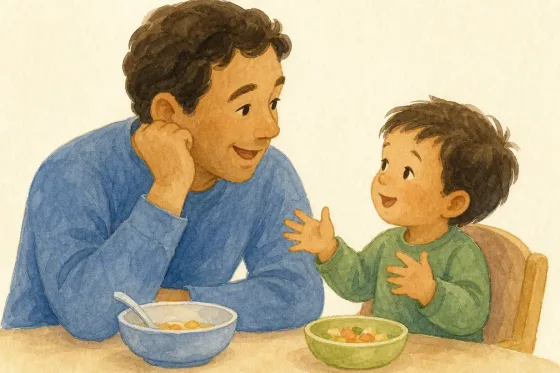 Their First Words vs Speech BlubsSpeech Blubs vs Their First Words, honestly: a video-modeling speech app on a subscription against parent-led flashcards in eight languages for $9.99 once. Who each one suits, where Speech Blubs is better, and what neither replaces.Compare ›
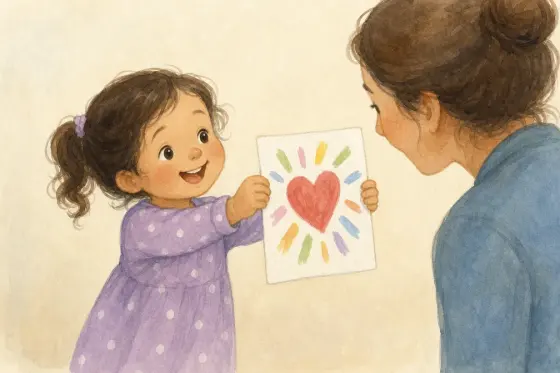 Their First Words vs Khan Academy KidsKhan Academy Kids vs Their First Words, honestly: the best free early-learning app there is, against parent-led first words and phrases in eight languages for $9.99 once. If you only install one app for a 3-to-6-year-old, this page tells you which.Compare ›
 Their First Words vs DinolingoDinolingo vs Their First Words, honestly: a 50-language course subscription for kids 2–14 at $199 a year, against first words and phrases in eight languages with native voices for $9.99 once. Who each one suits, and where Dinolingo is better.Compare ›
 Their First Words vs Little PimLittle Pim vs Their First Words, honestly: five-minute immersion videos for babies and toddlers in twelve languages on a subscription, against parent-led words and phrases in eight languages for $9.99 once. Same families, opposite ideas about who does the talking.Compare ›
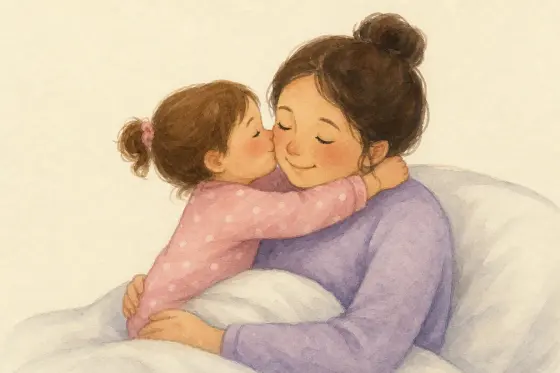 The best app for your familyTen guides by who you are: bilingual homes, late talkers, one-year-olds, travel, no subscriptions.Browse the guides ›
Simple Words, Special Moments
Start with one word.
75 words and 35 phrases are free, forever, with both voices. One $9.99 purchase opens the rest of the 1,000+ words and 500+ phrases, in all eight languages at once. No subscription, nothing renews.