Deutsch
German first words and phrases for toddlers
1,000+ illustrated words and 500+ everyday phrases in German, each one spoken by a woman and a man, both native German voices — so you can hear it before you say it. Ages 0–5. Free to start.
Free to start · Works offline · No ads
$9.99 once unlocks it all — no subscription.
Ich hab dich lieb.
“I love you.”
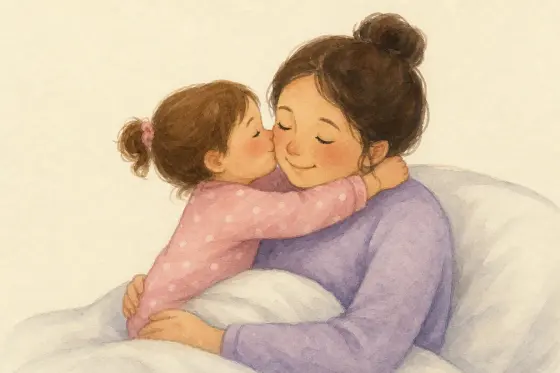
Hear it in German
Both clips are the app’s own audio. Tap one, then say it yourself — that second part is the one that counts.
The phrases library
Say these today.
Eight real cards from the free set, grouped by the moment they belong to. The German is exactly what the app shows; the English underneath is for you. Tap a voice, then say it out loud to your child — that is the whole method.
Mealtime
-
Noch mehr, bitte.
“More, please.”
-
Ich bin fertig.
“All done.”
Bedtime
-
Gute Nacht, schlaf schön.
“Good night, sleep tight.”
-
Ich hab Angst im Dunkeln.
“I'm afraid of the dark.”
Playtime
-
Wo ist es hin?
“Where did it go?”
-
Da bist du ja!
“There you are!”
Big Feelings
-
Ich bin traurig.
“I'm sad.”
-
Ich bin wütend!
“I'm mad!”
All 500+ phrases, grouped by moment: the phrases library.
The words library
First words, in three stages.
The word library is 1,000+ illustrated cards across three stages you pick for your child. Here are twenty-four of them in German — the ones with pictures are free; tap a voice.
First Words 0–24 months
-

Milch
milk
Food & Drink
-
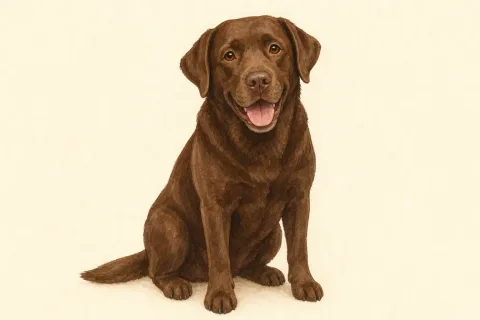
Hund
dog
Animals
-
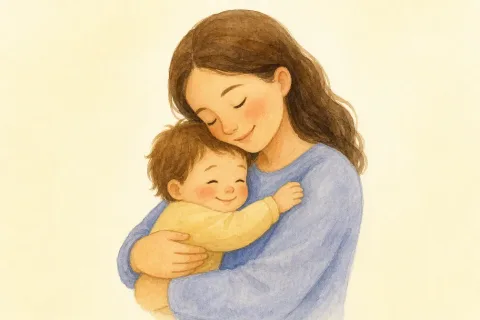
Mama
mama
People
-
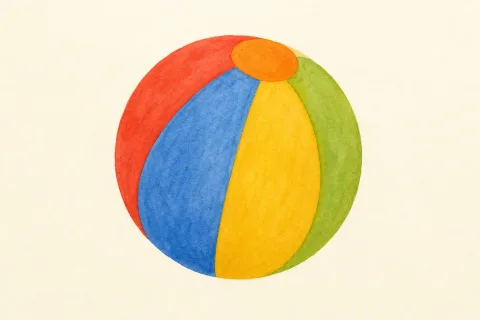
Ball
ball
Toys
Also in this stage, in the full library
Wasser
water
Food & Drink
Apfel
apple
Food & Drink
Mond
moon
Nature & Weather
Vogel
bird
Animals
Growing Words 2–3 years
-
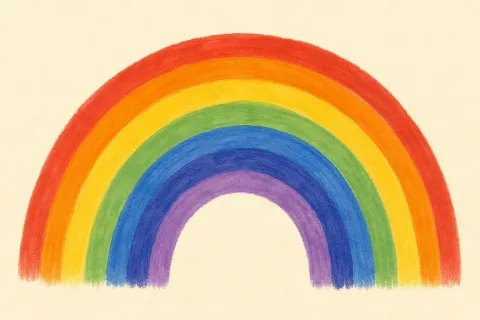
Regenbogen
rainbow
Nature & Weather
-
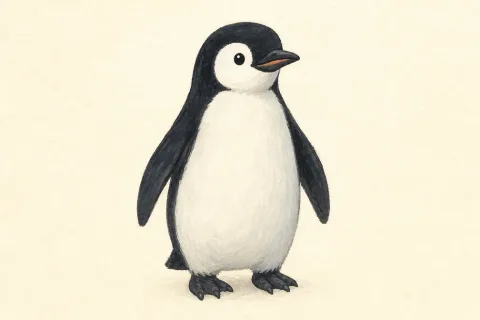
Pinguin
penguin
Animals
-
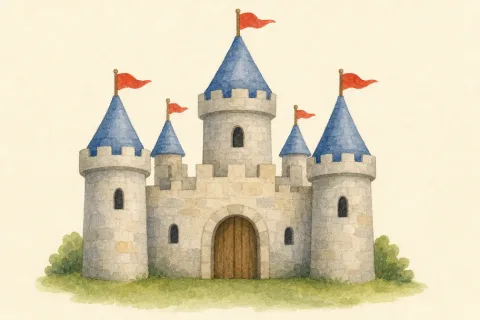
Burg
castle
Places
-

springen
jump
Actions
Also in this stage, in the full library
Schule
school
Places
teilen
share
Actions
Ärztin
doctor
People
Hände waschen
wash hands
Actions
Word Builder 3–5 years
-
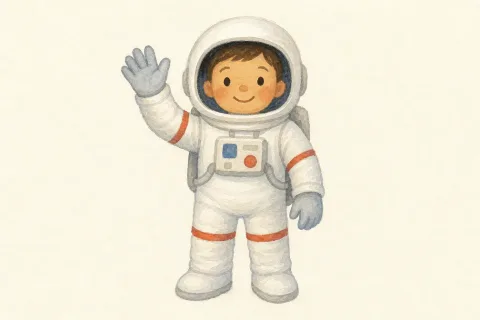
Astronaut
astronaut
People
-

Vulkan
volcano
Nature & Weather
-
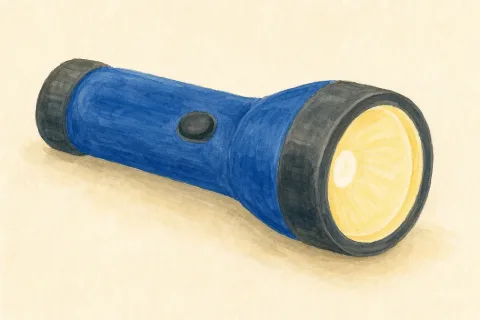
Taschenlampe
flashlight
Home
-
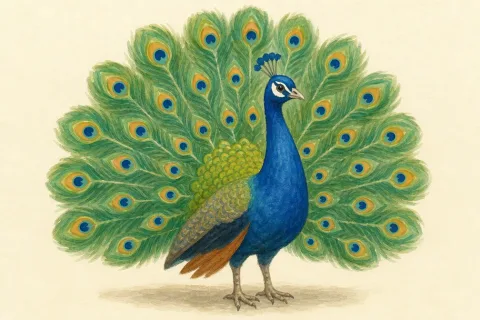
Pfau
peacock
Animals
Also in this stage, in the full library
Kolibri
hummingbird
Animals
Meerjungfrau
mermaid
People
mutig
brave
Feelings
feiern
celebrate
Actions
Prefer paper? Printable German flashcards — 110 free cards to print at home.
All 1,000+ words, grouped by category: the words library.
The whole library, not a smaller edition
What’s inside for German.
- 1,000+ words in 16 categories — Animals, Food & Drink, Body, Home, Vehicles, Feelings, and ten more.
- Three age stages — First Words (0–24 months), Growing Words (2–3 years), Word Builder (3–5 years). You choose; the app never quietly moves your child on.
- 500+ phrases in 9 themes — I Want & I Need, Look at This!, How I Feel, Talk With Me, and five more.
- Two native German voices on every card — a woman’s and a man’s voice on every word and every phrase, all in the app, so nothing needs a signal.
- German comes with every other supported language — English, Spanish, French, Portuguese, Italian, Korean and Russian are in the same app, at the same one price. Switch language on the card itself, without losing your place.
- 75 words and 35 phrases free, forever — 25 words for each stage, all in German, with both voices and their pictures.
Why families open these cards
For Oma und Opa.
For a lot of families the German cards are about two people who live somewhere else. The Sunday video call comes, and the child has a wave and nothing to say into it. Over time the calls get shorter.
Three or four things a child can produce on cue change that call: Hallo, Oma!, Ich hab dich lieb, the name of the dog. Nobody on that call is counting vocabulary. They are noticing that the child answered in their language.
It works in the other direction too. Show the grandparent the card, let them say Regenbogen into the phone in their own German, and let your child hear a voice they love saying it. The app is the prompt; the family is the point. With up to four child profiles, an older sibling and a baby keep their own lists.
What’s on the cards
How the German sounds and reads.
- Two German voices, on every card. Every word and every phrase is spoken twice — in a woman’s native German voice and in a man’s — and both live in the app at no extra cost. Whichever parent is doing bedtime, there is a voice on the card that sounds a little like them.
- A capital letter, and no article on the card. The card says Hund, Milch, Regenbogen — the article changes with the sentence you put the word into, so it lives in the phrases library, where the sentence is.
- The German a parent actually says. Parents say hab, not habe, so the cards do too. A child’s request is A child asks with Ich will, because that is what a two-year-old says. The cards say du, never Sie.
- ß stays where German writes it. Fuß, Straße, groß, heiß, weiß, Fußball — the cards carry ß, and the voices say them the way they are written.
- Long words stay whole. Feuerwehrauto, Taschenlampe, Sonnenbrille, Regenbogen. A thirteen-letter compound next to a two-year-old is exactly where the picture earns its place: the child reads the picture, and the word arrives as a sound.
- The word follows the picture. The doctor on the card is a woman, so the card says Ärztin; the scientist is Wissenschaftlerin, the artist Künstlerin. The grammar agrees with what your child is looking at, not with a dictionary headword.
Questions parents ask
German questions.
Why is there no der, die or das on the word cards?
A word card holds one word, because the picture already says which thing it is. A German article is not a fixed part of the word — it changes with case and sentence — so the words library teaches Hund, and the phrases library shows the word living inside a sentence, exactly as a parent would say it. If you want the article said aloud, say it yourself after the clip: that is the part your child learns from anyway.
Is German included in the free version?
Yes. The free set is 75 words and 35 phrases, and it is the same in every supported language, with both voices. No account, no trial clock, no ads. German is never the paid add-on; the one $9.99 purchase opens the rest of both libraries in every supported language at once.
We speak German and English at home. Can the app do both?
Yes. Language is set per child profile, and you can switch it right on the card, without losing your place, so the same picture can be Milch and then milk. You can keep up to four child profiles, each with its own language and its own progress.
Everything else — teaching a language you don’t speak, screen time for a baby, what the $9.99 unlocks — is answered on the FAQ.
Simple Words, Special Moments
Start with one word.
75 words and 35 phrases are free, forever — in German, with both voices. One $9.99 purchase opens the rest of the 1,000+ words and 500+ phrases, in all eight languages at once. No subscription, nothing renews.
Same app, same card
More languages.
German sits alongside every other supported language in the same app, on the same card. If your family runs on two of them, both are already here.