한국어
Korean first words and phrases for toddlers
1,000+ illustrated words and 500+ everyday phrases in Hangul, each one spoken by a woman’s and a man’s native Korean voice. Ages 0–5. Free to start.
Free to start · Works offline · No ads
$9.99 once unlocks it all — no subscription.
사랑해요.
“I love you.”

Hear it in Korean
Both clips are the app’s own audio. Tap one, then say it yourself — that second part is the one that counts.
The phrases library
Say these today.
Every phrase here is free — you can say them tonight. Tap either voice to hear it.
Mealtime
-
더 주세요.
“More, please.”
-
다 했어요.
“All done.”
Bedtime
-
잘 자, 푹 자.
“Good night, sleep tight.”
-
어두운 게 무서워요.
“I'm afraid of the dark.”
Playtime
-
어디 갔어요?
“Where did it go?”
-
우리 같이 해냈어요!
“We did it together!”
Big Feelings
-
슬퍼요.
“I'm sad.”
-
화났어요!
“I'm mad!”
All 500+ phrases, grouped by moment: the phrases library.
The words library
First words, in three stages.
Pick a stage, and the app shows that stage’s words. Each stage has 25 free words of its own. Below are eight words from each stage — the four with pictures are free, so tap and hear them now; the four under the lock come with the full library.
First Words 0–24 months
-

엄마
mama
People
-

우유
milk
Food & Drink
-

개
dog
Animals
-
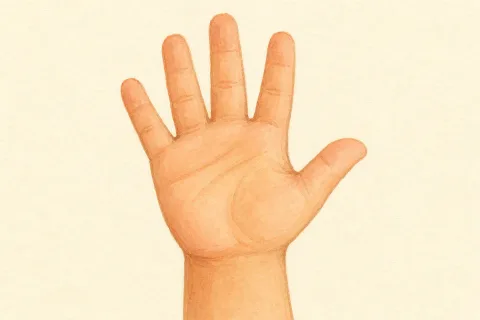
손
hand
Body
Also in this stage, in the full library
할머니
grandma
People
할아버지
grandpa
People
밥
rice
Food & Drink
달님
moon
Nature & Weather
Growing Words 2–3 years
-
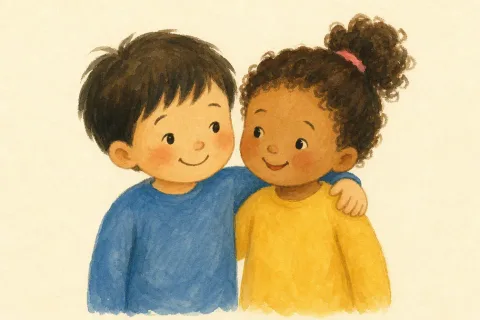
친구
friend
People
-
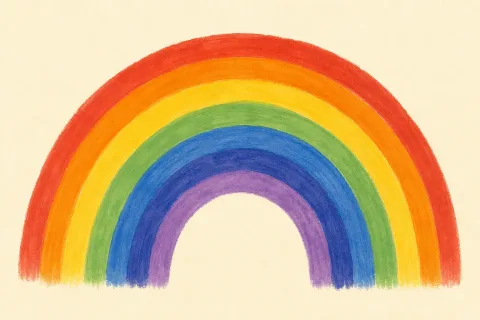
무지개
rainbow
Nature & Weather
-
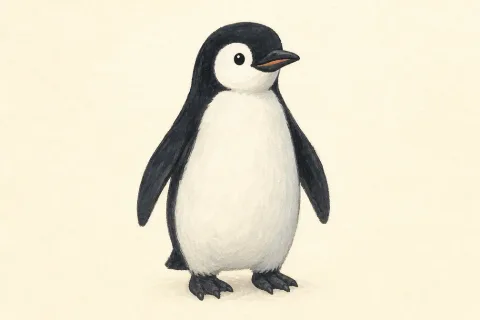
펭귄
penguin
Animals
-
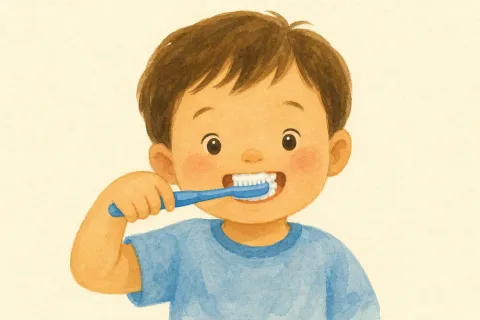
양치하다
brush teeth
Actions
Also in this stage, in the full library
선생님
teacher
People
학교
school
Places
연
kite
Toys
부끄럽다
shy
Feelings
Word Builder 3–5 years
-
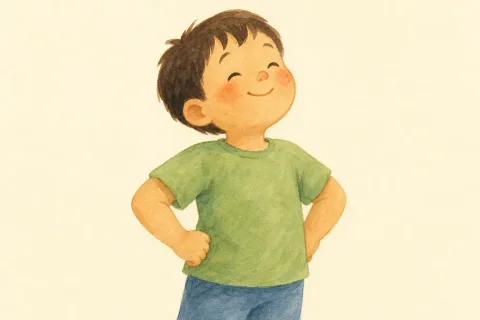
자랑스럽다
proud
Feelings
-

과학자
scientist
People
-

화산
volcano
Nature & Weather
-
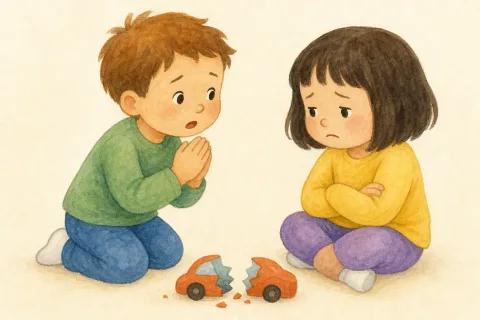
사과하다
apologize
Actions
Also in this stage, in the full library
병원
hospital
Places
해마
seahorse
Animals
바이올린
violin
Toys
용감하다
brave
Feelings
Prefer paper? Printable Korean flashcards — 110 free cards to print at home.
All 1,000+ words, grouped by category: the words library.
The whole library, not a smaller edition
What’s inside for Korean.
- 1,000+ words in 16 categories — Animals, Food & Drink, Body, Home, Vehicles, Feelings, and ten more.
- Three age stages — First Words (0–24 months), Growing Words (2–3 years), Word Builder (3–5 years). You choose; the app never quietly moves your child on.
- 500+ phrases in 9 themes — I Want & I Need, Look at This!, How I Feel, Talk With Me, and five more.
- Two native Korean voices on every card — a woman’s and a man’s voice on every word and every phrase, all in the app, so nothing needs a signal.
- Korean comes with every other supported language — English, Spanish, French, Portuguese, German, Italian and Russian are in the same app, at the same one price. Switch language on the card itself, without losing your place.
- 75 words and 35 phrases free, forever — 25 words for each stage, all in Korean, with both voices and their pictures.
Why families open these cards
For the grandparents.
For many families this is the whole motive, so it is worth saying plainly: you want your child to be able to talk to 할머니 and 할아버지.
Video calls are hard on a toddler — a face, a lag, questions in a language they hear once a week, and a small person who goes quiet and wanders off. What changes that is not fluency. It is having three or four things your child can produce on cue — 사랑해요, 고마워요, 보고 싶어요 — so the call has somewhere to start. Practice them at bedtime in the week; use them on Sunday. Hearing your own language come back from a two-year-old is a good thing to be able to give someone.
It works the same for families driving to Korean school on Saturday mornings. The classroom is two hours a week; the words have to live somewhere in between, and a minute at breakfast with four cards is not homework. With up to four child profiles, an older sibling on 과학자 and a baby on 엄마 keep their own lists.
What’s on the cards
How the Korean actually reads.
- Hangul, and only Hangul. There is no romanization anywhere in the app — not under the word, not as a toggle. If you can’t read Hangul yet, that is harder on day one. What your child gets is the writing system they will meet. Until then the speaker button is your romanization, and it is more accurate than any spelling.
- Two voices matter more in Korean than people expect. Pitch and sentence-final intonation carry a lot in spoken Korean and sit differently on a woman’s voice and a man’s. A child who has only heard 사랑해요 in one voice has heard one shape of it — so every card carries both, and the switch is on the card.
- The polite level a child would really use. More than 300 current Korean phrases end in -요 — 해요체, the everyday polite level — and every one of those is a line the child says: 더 주세요, 다 했어요, 사랑해요. More than 100 lines written for the grown-up are in plain form instead, because that is how a parent speaks to a small child: 잘 자, 푹 자. Not one phrase in the set uses the formal -습니다 ending; nobody talks that way at bath time.
- Verbs and feelings in dictionary form. 127 of the 128 Korean action words end in -다 — 양치하다, 사과하다 — and all 25 feeling words are descriptive verbs in the same shape: 부끄럽다, 용감하다. It is the form a child hears conjugated a hundred ways, so it is the one worth having in your head.
- The words Korean parents use with babies. Sun, moon and star carry the affectionate -님: 해님, 달님, 별님. Rice on the table is 밥. Dog is 개 so that puppy can keep 강아지, the word a toddler hears far more often.
- Where the picture does the work. Eight Korean words in the app are written the same but mean two or three different things. The picture is what tells them apart — a small argument for pictures over word lists.
- 눈eye · snow
- 배pear · tummy · boat
- 다리leg · bridge
- 턱chin · jaw
- 불light · fire
- 풀glue · grass
- 위up · above
- 가져오다fetch · bring
Questions parents ask
Korean questions.
Do I need to read Hangul to use the Korean cards?
No. Every Korean card carries a speaker button with a woman’s voice and a man’s, both native. Tap it, listen, say it back. The English is on the card too — and after a few weeks of the same twenty cards, most parents start recognizing the Hangul without meaning to.
How polite is the Korean my child hears?
The child’s lines are in 해요체, the everyday polite level: more than 300 current Korean phrases end in -요, and every one is a child’s line. More than 100 grown-up lines are in plain form, because that is how a parent speaks to a small child. Nothing in the set uses the formal -습니다 ending.
Is Korean an extra purchase?
No. Every supported language sits in the same app at the same price. Free forever is 75 words and 35 phrases in Korean, both voices. One $9.99 purchase opens the rest of the 1,000+ words and 500+ phrases, in every supported language at once. Nothing renews.
Everything else — teaching a language you don’t speak, screen time for a baby, what the $9.99 unlocks — is answered on the FAQ.
Simple Words, Special Moments
Start with one word.
75 words and 35 phrases are free, forever — in Korean, with both voices. One $9.99 purchase opens the rest of the 1,000+ words and 500+ phrases, in all eight languages at once. No subscription, nothing renews.
Same app, same card
More languages.
Korean sits alongside every other supported language in the same app, on the same card. If your family runs on two of them, both are already here.