Home › Guides › First Spanish words
Spanish at home, one word at a time
First Spanish words for toddlers: 75 to start with.
The first Spanish words a family needs are the ones a toddler can see: milk, dog, shoe, mamá. Here are 75, grouped by age and topic, with the English beside each and a native speaker to copy — plus which five to start with and how to use them at the table.
Start with what they can see
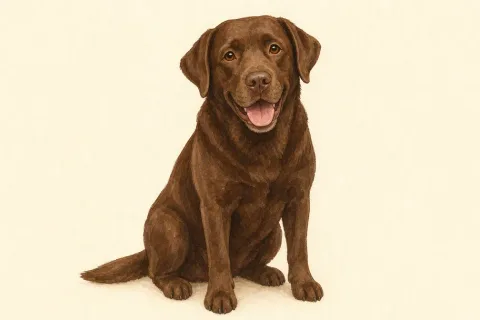
Across languages, a toddler’s first ten words look alike: the people who look after them, animals and the sounds they make, food, and a few greetings and routines.1 “Mamá”, “leche”, “perro” and “adiós” come long before “azul” or “tres”. So the first Spanish words worth teaching are not a colour chart or the alphabet; they are the nouns of an ordinary day, said at the moment the child is looking at the thing.
If your family is adding Spanish to English, count both. Bilingual toddlers reach the same milestones on the same schedule when their vocabulary is counted across both languages together, and a child who says “milk” at breakfast and “leche” at dinner has two words, not one.2, 3 The bilingual toddler guide has the studies.
The first five: leche (milk), mamá, papá, perro (dog), pelota (ball). Say the Spanish word every time your child reaches for the thing, for a week. Then add one more.
How to say them
Spanish is kinder to beginners than English is. Five vowels, each with one sound, always: a as in “father”, e as in “bed”, i as in “machine”, o as in “more”, u as in “rule”. A few things trip English speakers up:
- The accent mark tells you where to push. mamá and papá stress the last syllable; plátano stresses the first. Without a mark, words ending in a vowel, n or s stress the second-to-last syllable: pe-LO-ta, za-PA-to.
- ñ is the “ny” in “canyon”: montaña, niño.
- rr is rolled: perro, carro, arcoíris. A quick tap of the tongue is fine; your child will copy the recording, not you.
- h is silent and, in Latin American Spanish, z and soft c sound like s: zapato starts with “sa”, cocina is “co-SEE-na”.
The words below are in the Latin American Spanish most families in the United States hear. A family from Spain will say coche for carro and gafas de sol for lentes de sol; a child who learns one will understand the other. Adjectives change their ending for a girl or a boy, so emocionado becomes emocionada, and científica on the card has a brother, científico.
The 75 words
These are the free words from Their First Words in Spanish, in the three stages the app uses. Every word is recorded by a native speaker, a woman and a man; tap to hear it, then say it yourself. The same 75, plus 35 everyday phrases, are also free printable Spanish flashcards with the English underneath.
Voice for every word on this page:
First Words 0–24 months · 25 words
| Spanish | English | Hear it |
|---|---|---|
| perro | dog | |
| gato | cat | |
| pato | duck | |
| leche | milk | |
| plátano | banana | |
| mano | hand | |
| cuchara | spoon | |
| zapato | shoe | |
| pelota | ball | |
| osito de peluche | teddy bear | |
| carro | car | |
| tren | train | |
| árbol | tree | |
| flor | flower | |
| parque | park | |
| mamá | mama | |
| papá | dada | |
| bebé | baby | |
| comer | eat | |
| abrazar | hug | |
| rosa | pink | |
| dos | two | |
| corazón | heart | |
| feliz | happy | |
| listo | done |
Growing Words 2–3 years · 25 words
| Spanish | English | Hear it |
|---|---|---|
| pingüino | penguin | |
| dinosaurio | dinosaur | |
| delfín | dolphin | |
| pizza | pizza | |
| frente | forehead | |
| cocina | kitchen | |
| lentes de sol | sunglasses | |
| rompecabezas | puzzle | |
| camión de bomberos | fire truck | |
| barco | ship | |
| arcoíris | rainbow | |
| mar | ocean | |
| montaña | mountain | |
| zoológico | zoo | |
| castillo | castle | |
| amigo | friend | |
| pintar | painting | |
| saltar | jump | |
| trepar | climb | |
| cepillarse los dientes | brush teeth | |
| morado | purple | |
| once | eleven | |
| rombo | diamond | |
| emocionado | excited | |
| suave | gentle |
Word Builder 3–5 years · 25 words
| Spanish | English | Hear it |
|---|---|---|
| pavo real | peacock | |
| calabacita | zucchini | |
| cerebro | brain | |
| imán | magnet | |
| linterna | flashlight | |
| acuario | aquarium | |
| uniforme | uniform | |
| trampolín | trampoline | |
| nave espacial | spaceship | |
| auto de carreras | race car | |
| globo terráqueo | globe | |
| volcán | volcano | |
| iglú | igloo | |
| astronauta | astronaut | |
| científica | scientist | |
| artista | artist | |
| princesa | princess | |
| superhéroe | superhero | |
| hacer de cuenta | pretend | |
| pedir perdón | apologize | |
| lavanda | lavender | |
| veinte | twenty | |
| cubo | cube | |
| orgulloso | proud | |
| entre | between |
Using them in an ordinary day
A toddler learns a word from a person, in the moment the thing is in front of them, said more than once. Nothing on this page replaces that; it only hands you the word. Pick a routine and keep the Spanish to it for a week:
- Breakfast: leche, plátano, cuchara, and más, por favor when the bowl is empty. The mealtime guide walks through exactly this.
- Getting dressed: zapato, mano, and listo when the shoe is on.
- The park: árbol, flor, perro, pelota, saltar.
- Bedtime: osito de peluche, abrazar, te quiero.
Name what your child is already looking at, not what you want them to look at; wait a few seconds after you say it; and treat a point, a sound or an English word as a correct answer, then say the Spanish again.4 If you use two languages at home and want one calm way to do it with cards, the two-language card routine is five minutes a day.
Paper, app, or both
The printable cards are free, no sign-up, and work with no screen at all; print them, cut on the lines, and keep five on the fridge. The app is free to start with these same 75 words and 35 phrases, and adds the two native voices, favourites and offline play; one payment opens the rest of the 1,000+ words and 500+ phrases. Either way, the learning happens in your voice.
In short
Questions parents ask.
What Spanish words should a toddler learn first?
The ones they can see and want: people (mamá, papá, bebé), food (leche, plátano), animals (perro, gato), and the objects of their routines (zapato, pelota, cuchara). Across languages, toddlers’ earliest words cluster in those groups, so start there rather than with colours, numbers or the alphabet.
How many Spanish words should I start with?
Five. Pick the five things your child reaches for most often, say the Spanish word every time they do, and add a word a week once those five are familiar. A toddler who is pointing and copying is ready for more; a toddler who is not is not behind.
Will learning Spanish words slow down my toddler’s English?
No. Bilingual toddlers hit the same milestones on the same schedule when you count words across both languages together. A child with 20 English words and 15 Spanish words has 35 words.
What if I don’t speak Spanish well?
Say it anyway. The recordings on this page are native speakers; copy them, let your child hear both, and do not worry about your accent. A parent saying “leche” at the highchair every morning does more than a perfect speaker on a screen.
What this is based on
Sources
- Tardif, T., Fletcher, P., Liang, W., Zhang, Z., Kaciroti, N. & Marchman, V. A. (2008). Baby’s first 10 words. Developmental Psychology, 44(4), 929–938. doi:10.1037/0012-1649.44.4.929
- Pearson, B. Z., Fernández, S. C. & Oller, D. K. (1993). Lexical development in bilingual infants and toddlers: comparison to monolingual norms. Language Learning, 43(1), 93–120. doi:10.1111/j.1467-1770.1993.tb00174.x
- Byers-Heinlein, K. & Lew-Williams, C. (2013). Bilingualism in the early years: what the science says. LEARNing Landscapes, 7(1), 95–112. doi:10.36510/learnland.v7i1.632
- Tomasello, M. & Farrar, M. J. (1986). Joint attention and early language. Child Development, 57(6), 1454–1463. doi:10.2307/1130423
More guides
Keep reading.
 When do babies say their first words?Around the first birthday, with a wide normal range. What counts, what helps, when to ask.Read the guide · 6 min ›
 Raising a bilingual toddler: what the research says.What the research says about two languages at home, and how to make it work.Read the guide · 7 min ›
 How to use flashcards with a toddler (without turning it into a quiz).Five rules for cards without a quiz — and the research behind each one.Read the guide · 5 min ›
 Is my toddler a late talker? When to worry, and when not to.What the term really means, what to expect at each age, how many children catch up, and the signs worth a call.Read the guide · 9 min ›
 Does a second language delay a child’s speech?No — and here are the studies to hand to whoever asked.Read the guide · 6 min ›
 How many words should an 18-month-old say?The CDC asks for three words. The typical toddler says about fifty. Both are fine.Read the guide · 5 min ›
 Screen time under two: what the research actually says.The AAP and WHO guidance, the studies behind it, and the one screen that teaches.Read the guide · 6 min ›
 A first words list by age.The categories that often come first across languages, and roughly when, from 12 months to 3.Read the guide · 7 min ›
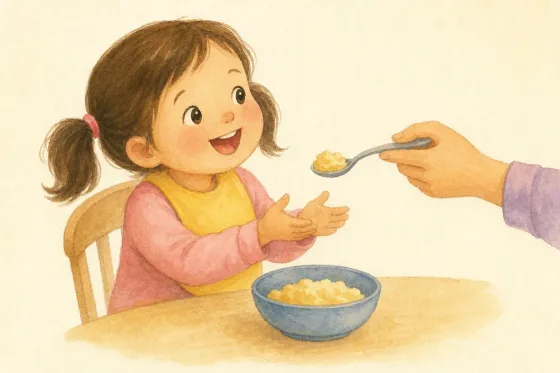 From a mealtime word to a useful phrase.Use four real cards, playable audio, and one printable sheet during a meal.Read the guide · 4 min ›
- A two-language card routine for an ordinary meal.A small English–Spanish meal routine with actual cards and recordings.Read the guide · 5 min ›
Simple Words, Special Moments
Start with one word.
75 words and 35 phrases are free, forever, with both voices. One $9.99 purchase opens the rest of the 1,000+ words and 500+ phrases, in all eight languages at once. No subscription, nothing renews.