Home › Guides › First Russian words
Russian at home, one word at a time
First Russian words for toddlers: 75 to start with.
Milk (молоко molokó) at breakfast. A shoe (ботинок botínok) at the door. A duck (уточка útochka) at the park. These are good places to begin with Russian. Here are 75 words in Cyrillic, with a transliteration and the English beside each and a native voice to copy, plus a small set to try first.
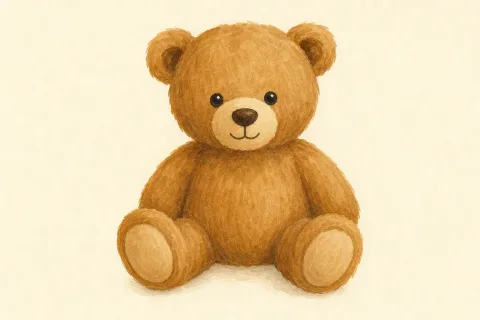
Start with what they can see
Research on first words gives a family adding Russian a place to begin. A study of English, Cantonese and Mandarin learners aged eight to sixteen months found that babies’ first words had much in common across languages, though the share of names for things, people words and action words differed from one language to the next.1 A seven-country study, which did not include Russian, asked mothers of twenty-month-olds to fill in matching word checklists: in every language, names for things made up the biggest share of children’s words, except among children just starting to talk.2
There is Russian data too. The standard parent word checklist has a Russian version, with norms from 768 babies aged eight to eighteen months and 1,037 toddlers aged eighteen to thirty-six months, all learning Russian only.3 Researchers using Wordbank, an open archive of these checklists, ranked each language’s words by the age at which half of children were reported to say them. The ten earliest Russian words included mommy, daddy, grandma, grandpa and aunt, along with meow, woof woof, bye and ball.4 So family, animals and the things in the room make a good start, and a word for something your child does, such as есть yestʼ (eat), can join them.
Five to try: молоко molokó (milk), мама máma (mom), папа pápa (dad), мяч myach (ball), собачка sobáchka (dog). A favorite toy or a different food can take the place of one your family rarely uses.
Words in both languages count. Bilingual children are no more likely than other children to have trouble with language, and with both languages counted together they know about as many words as children learning one.5 A speech or language problem shows up in every language a child uses, so a check should look at all of them,5, 6 and with a Russian version of the checklist, that check can include Russian too.3 The bilingual toddler guide explains more.
How Russian sounds and reads
Each word here comes with a transliteration in the BGN/PCGN system, which American and British naming authorities adopted in the 1940s for Russian names.7 We add one mark of our own: an accent on the stressed vowel, as in molokó, because Russian stress is hard to guess and a misplaced one changes how the word sounds. The spelling is a bridge for the first weeks; the native voice is a better guide than any spelling. A few things to listen for:
- Thirty-three letters, some of them familiar. The Russian alphabet has 33 Cyrillic letters.7 а, к, м and о sound much as they look. Some are false friends: в is v, н is n, р is r, с is s and у is u, so парк park looks a little like “napk”.
- Some new ones. ж is zh, the sound in the middle of “measure”, as in пожарная машина pozhárnaya mashína (fire truck). ш is sh, ч is ch, and щ, spelled shch, is a long, soft sh. ю and я are yu and ya, and ы is a vowel English does not have, as in малыш malýsh (baby).
- Hard and soft consonants. Most Russian consonants come in two versions, and the soft one is said with the middle of the tongue raised, as if a faint y followed. The soft sign ь has no sound of its own; it softens the letter before it, as at the end of есть yestʼ (eat), and shows as an apostrophe, ʼ, in the spellings here.
- Stress changes the vowels. A vowel without stress goes quieter, and an unstressed o sounds close to a: молоко molokó comes out close to “ma-la-KO”. Russian writing usually leaves stress unmarked, and stress can change the word: замок zámok (castle) with the stress moved to the end, zamók, is a lock.
- ё is always stressed. It sounds like yo, spelled yë or ë here. Russian print often leaves off its two dots;7 the cards keep them, as in всё vsë (done).
- A rolled r. р is a quick trill or tap of the tongue tip, as in рука ruká (hand).
- Letters that change at the end. At the end of a word, б, в, г, д, ж and з are said like p, f, k, t, sh and s, so друг drug (friend) ends in a k sound and лоб lob (forehead) in a p. The same happens before letters such as к, so ложка lózhka (spoon) sounds like “LOSH-ka”.
The 75 words
These are the free words from Their First Words in Russian, in the three stages the app uses. Every word has two native voices, a woman’s and a man’s, so you can hear it before trying it yourself. The same 75, plus 35 everyday phrases, are also free printable Russian flashcards, with an optional second language such as English.
Russian nouns are masculine, feminine or neuter, and word endings change with gender and with a word’s job in the sentence; the cards show each word in its starting form, before any ending changes. The action words here are infinitives, ending in -ть -tʼ or -ться -tʼsya, and feelings such as happy and proud are in the form a boy would use: for a girl, счастливый schastlívyy (happy) becomes счастливая schastlívaya. The artist card shows a woman, so it says художница khudózhnitsa; a man is художник khudózhnik. The scientist card also shows a woman and says учёный uchënyy, the word Russian uses for both.
Voice for every card on this page:
First Words 0–24 months · 25 words
| Russian | English | Hear it |
|---|---|---|
| собачкаsobáchka | dog | |
| кисаkísa | cat | |
| уточкаútochka | duck | |
| молокоmolokó | milk | |
| бананbanán | banana | |
| рукаruká | hand | |
| ложкаlózhka | spoon | |
| ботинокbotínok | shoe | |
| мячmyach | ball | |
| плюшевый мишкаplyúshevyy míshka | teddy bear | |
| машинаmashína | car | |
| поездpóyezd | train | |
| деревоdérevo | tree | |
| цветочекtsvetóchek | flower | |
| паркpark | park | |
| мамаmáma | mama | |
| папаpápa | dada | |
| малышmalýsh | baby | |
| естьyestʼ | eat | |
| обниматьobnimátʼ | hug | |
| розовыйrózovyy | pink | |
| дваdva | two | |
| сердечкоserdéchko | heart | |
| счастливыйschastlívyy | happy | |
| всёvsë | done |
Growing Words 2–3 years · 25 words
| Russian | English | Hear it |
|---|---|---|
| пингвинpingvín | penguin | |
| динозаврdinozávr | dinosaur | |
| дельфинdelʼfín | dolphin | |
| пиццаpítstsa | pizza | |
| лобlob | forehead | |
| кухняkúkhnya | kitchen | |
| солнцезащитные очкиsolntsezashchítnyye ochkí | sunglasses | |
| пазлpazl | puzzle | |
| пожарная машинаpozhárnaya mashína | fire truck | |
| корабльkoráblʼ | ship | |
| радугаráduga | rainbow | |
| океанokeán | ocean | |
| гораgorá | mountain | |
| зоопаркzoopárk | zoo | |
| замокzámok | castle | |
| другdrug | friend | |
| рисовать краскамиrisovátʼ kráskami | painting | |
| прыгатьprýgatʼ | jump | |
| забиратьсяzabirátʼsya | climb | |
| чистить зубыchístitʼ zúby | brush teeth | |
| фиолетовыйfiolétovyy | purple | |
| одиннадцатьodínnadtsatʼ | eleven | |
| ромбromb | diamond | |
| в восторгеv vostórge | excited | |
| нежноnézhno | gentle |
Word Builder 3–5 years · 25 words
| Russian | English | Hear it |
|---|---|---|
| павлинpavlín | peacock | |
| кабачокkabachók | zucchini | |
| мозгmozg | brain | |
| магнитmagnít | magnet | |
| фонарикfonárik | flashlight | |
| аквариумakvárium | aquarium | |
| формаfórma | uniform | |
| батутbatút | trampoline | |
| космический корабльkosmícheskiy koráblʼ | spaceship | |
| гоночная машинаgónochnaya mashína | race car | |
| глобусglóbus | globe | |
| вулканvulkán | volcano | |
| иглуíglu | igloo | |
| космонавтkosmonávt | astronaut | |
| учёныйuchënyy | scientist | |
| художницаkhudózhnitsa | artist | |
| принцессаprintséssa | princess | |
| супергеройsupergeróy | superhero | |
| играть понарошкуigrátʼ ponaróshku | pretend | |
| извинятьсяizvinyátʼsya | apologize | |
| лавандовыйlavándovyy | lavender | |
| двадцатьdvádtsatʼ | twenty | |
| кубkub | cube | |
| гордыйgórdyy | proud | |
| междуmézhdu | between |
Little words for small children
Russian grown-ups talk to small children in affectionate little forms, and the cards use them. The dog is собачка sobáchka, where the plain word is собака sobáka. The cat is киса kísa; in grown-up talk a cat is кошка kóshka, or кот kot for a male. The flower is цветочек tsvetóchek, from цветок tsvetók, and the duck is уточка útochka, from утка útka. The teddy bear is a плюшевый мишка plyúshevyy míshka, a plush bear called by the pet name Russians give bears, from Misha, short for Mikhail; the plain word for a bear is медведь medvédʼ. Even the heart is a little one: сердечко serdéchko, from сердце sérdtse. Russian has its own baby talk too: ам-ам am-am for eating, бо-бо bo-bo for an owie and бай-бай bay-bay when rocking a baby to sleep.
These forms are warm, not wrong. Diminutives, as they are called, are common in Russian talk to young children, and in a study of forty-six Russian-speaking children aged nearly three to nearly five, the children got the gender endings right more often when an animal had a diminutive name than when it had the plain one.8 The little words suit home, and the plain ones come along later.
Two words for “you”, and family words
Russian has two words for “you”. ты ty is for family, friends and children; вы vy is the polite form, and also the plural. Parents say ты to a child, and children usually say it back to the family, grandparents included. вы is the form children learn for grown-ups outside the family, such as a teacher, so it can wait. Every “you” in these free phrases is ты:
| Russian | English | Hear it |
|---|---|---|
| Ещё, пожалуйста.Yeshchë, pozháluysta | More, please.said by a child | |
| Спасибо.Spasíbo | Thank you.said by a child | |
| Я тебя люблю.Ya tebyá lyublyú | I love you.said by a child · uses ты | |
| Всё.Vsë | All done.said by a child | |
| Это моя мама.Éto moyá máma | This is my mommy.said by a child | |
| Хочешь поиграть?Khócheshʼ poigrátʼ? | Do you want to play?child to a friend · uses ты | |
| Держи меня за руку.Derzhí menyá za rúku | Hold my hand.grown-up to a child · uses ты | |
| Спокойной ночи, спи крепко.Spokóynoy nóchi, spi krépko | Good night, sleep tight.grown-up to a child · uses ты |
In Я тебя люблю Ya tebyá lyublyú (I love you), тебя tebyá is ты in another form, and хочешь khócheshʼ (want), держи derzhí (hold) and спи spi (sleep) are the ты forms of their verbs.
At every age, мама máma and папа pápa are the everyday words. Это моя мама Éto moyá máma (this is my mommy) and Это мой папа Éto moy pápa (that’s my daddy) show gender at work: моя moyá for Mom and мой moy for Dad, because папа is masculine even though it ends like мама.
Using them in an ordinary day
A few Russian words can fit into a routine you already have. Here is what that might sound like:
- Breakfast: молоко molokó (milk), банан banán, ложка lózhka (spoon), and Ещё, пожалуйста Yeshchë, pozháluysta (more, please) when the bowl is empty. The mealtime guide walks through exactly this.
- Getting dressed: ботинок botínok (shoe), рука ruká (hand), and всё vsë (done) when the shoes are on.
- The park: парк park (park), дерево dérevo (tree), цветочек tsvetóchek (flower), уточка útochka (duck), мяч myach (ball).
- Bedtime: плюшевый мишка plyúshevyy míshka (teddy bear), малыш malýsh (baby), and Спокойной ночи, спи крепко Spokóynoy nóchi, spi krépko (good night, sleep tight) at lights-out.
Your child’s interest gives you an opening: “уточка útochka” when they spot a duck, then a few seconds for a reply.9 A point, a sound or “duck” keeps the exchange going; you can answer with the Russian word again. The two-language card routine shows how that can work with a picture beside the real meal.
Grandparents, Saturday school and one-language parents
Whether your family’s Russian comes from Russia, Ukraine, Belarus, Kazakhstan, Israel or somewhere else, the grandparents are often the reason: a child who can talk to бабушка bábushka (grandma) and дедушка dédushka (grandpa). Families also say the warmer бабуля babúlya and дедуля dedúlya, and many toddlers shorten grandma and grandpa to баба bába and деда déda. A video call goes better when a toddler has something to say on cue: Я тебя люблю Ya tebyá lyublyú (I love you), Спасибо Spasíbo (thank you), or Это моя мама Éto moyá máma (this is my mommy) when Mom leans into the frame. A week of saying them at bedtime gives Sunday’s call somewhere to start.
A Russian Saturday school or a bilingual preschool adds hours in Russian, and the words still need somewhere to live at home; a minute with four cards at breakfast is not homework. More speakers also mean more of the day in Russian. In a study of twenty-nine Spanish–English two-year-olds, the share of the day each language filled predicted how each was coming along, and for English, so did the number of different people the child heard it from.10 A grandparent, a teacher and a family friend each add time in Russian and another voice.
When only one parent speaks Russian, the home language has fewer voices. In a survey of 1,899 families with children aged six to ten, in which at least one parent spoke a language other than the majority language, the best odds of a child speaking it were in homes where both parents used it and no more than one also spoke the majority language; “one parent, one language” was neither necessary nor sufficient.11 In a mixed home, the Russian speaker’s minutes, and the grandparents’, carry more of the weight. The other parent does not need to switch; the AAP and ASHA advise using the language you are most comfortable in.6 Knowing мама máma (mom), папа pápa (dad) and Ещё, пожалуйста Yeshchë, pozháluysta (more, please) well enough to answer them is a warm way to join in.
Some families chose Russian without growing up with it, and the guide to a language you don’t speak covers how that can work. And if your own Russian went quiet after childhood, you are far from alone: home languages are more likely than the community language to fade as children grow.5 Either way, the native voices on this page give you the word to borrow.
Paper, app, or both
The printable cards are free, with no sign-up, and can live on the fridge or beside a favorite book. The app starts with the same free words and phrases, written in Cyrillic with no transliteration. Every card has a woman’s and a man’s native voice, there are no ads, and it plays offline; the language pill turns молоко molokó into milk on the same picture. One $9.99 purchase opens the rest of the 1,000+ words and 500+ phrases, in all eight languages. Both are there for the word; the conversation over breakfast is yours. Neither is a treatment for language delay. You can come back to this page whenever you want to hear a word again.
In short
Questions parents ask.
What Russian words should a toddler learn first?
Familiar people, food and everyday things are useful starting points: мама máma (mom), папа pápa (dad), молоко molokó (milk), банан banán, мяч myach (ball) and собачка sobáchka (dog). In Russian parent checklists, mommy, daddy, grandma and grandpa were among the ten earliest words children said, along with meow and woof woof. Words for things your child notices give you something to talk about together.
Are there special Russian words for babies and toddlers?
Yes. Russian grown-ups talk to small children in affectionate little forms, and the cards use them: собачка sobáchka (dog), киса kísa (cat), цветочек tsvetóchek (flower) and уточка útochka (duck). The plain words are собака sobáka, кошка kóshka, цветок tsvetók and утка útka. Both are correct; the little ones are the words a Russian toddler usually hears at home.
Will Russian at home slow down my toddler’s English?
No. Learning more than one language does not cause a speech or language problem, and a problem would show up in every language a child uses. Counted across Russian and English together, with a word known in both languages counted once, bilingual toddlers know about as many words as toddlers learning one language. A word in either language counts.
What if only one of us speaks Russian?
It can still work. In a large survey, the best odds of a child speaking the home language came when both parents used it, and “one parent, one language” was neither necessary nor sufficient. In a mixed home, the Russian-speaking parent’s time, plus grandparents, friends and Saturday school, carries more of the weight. The other parent can keep to the language they are most comfortable in; knowing мама máma (mom), папа pápa (dad) and Ещё, пожалуйста Yeshchë, pozháluysta (more, please) well enough to answer them is a warm way to join in.
What this is based on
Sources
- Tardif, T., Fletcher, P., Liang, W., Zhang, Z., Kaciroti, N. & Marchman, V. A. (2008). Baby’s first 10 words. Developmental Psychology, 44(4), 929–938. PMID 18605825
- Bornstein, M. H., Cote, L. R., Maital, S., Painter, K., Park, S.-Y., Pascual, L., Pêcheux, M.-G., Ruel, J., Venuti, P. & Vyt, A. (2004). Cross-linguistic analysis of vocabulary in young children: Spanish, Dutch, French, Hebrew, Italian, Korean, and American English. Child Development, 75(4), 1115–1139. PMID 15260868
- Eliseeva, M. B., Vershinina, E. A., Ryskina, V. L. & Ceytlin, S. N., MacArthur CDI: Russian version (CDI:WG, CDI:WS, long forms) — information provided by the authors to the MacArthur-Bates CDI Advisory Board (2017): norming samples of 768 infants aged 8–18 months and 1,037 toddlers aged 18–36 months. mb-cdi.stanford.edu
- Frank, M. C., Braginsky, M., Yurovsky, D. & Marchman, V. A. (2021). Variability and Consistency in Early Language Learning: The Wordbank Project. MIT Press. Chapter 8, Consistency in Early Vocabulary, Table 8.1 (the ten earliest words children produce in each language). langcog.github.io
- Byers-Heinlein, K. & Lew-Williams, C. (2013). Bilingualism in the early years: what the science says. LEARNing Landscapes, 7(1), 95–112. PMC6168212
- AAP and ASHA, Young Children Learning Multiple Languages: Parent FAQs — a speech or language problem shows up in every language; use the language you are most comfortable with. healthychildren.org
- Permanent Committee on Geographical Names, Romanization of Russian: BGN/PCGN 1947 System (checked November 2022) — the 33-letter table, the rules for ye and yë, and the note that the dots on ё are generally not shown. gov.uk
- Kempe, V., Brooks, P. J., Mironova, N. & Fedorova, O. (2003). Diminutivization supports gender acquisition in Russian children. Journal of Child Language, 30(2), 471–485. dspace.stir.ac.uk
- Tomasello, M. & Farrar, M. J. (1986). Joint attention and early language. Child Development, 57(6), 1454–1463. PMID 3802971
- Place, S. & Hoff, E. (2011). Properties of dual language exposure that influence 2-year-olds’ bilingual proficiency. Child Development, 82(6), 1834–1849. doi:10.1111/j.1467-8624.2011.01660.x
- De Houwer, A. (2007). Parental language input patterns and children’s bilingual use. Applied Psycholinguistics, 28(3), 411–424. doi:10.1017/S0142716407070221
Simple Words, Special Moments
Start with one word.
75 words and 35 phrases are free, forever, with both voices. One $9.99 purchase opens the rest of the 1,000+ words and 500+ phrases, in all eight languages at once. No subscription, nothing renews.
More guides
Keep reading.
 How much exposure does a bilingual toddler need?The floor researchers use, why the home language is the one at risk, and where the extra minutes come from.Read the guide · 8 min ›
 Raising a bilingual toddler: what the research says.Why mixing is normal, how vocabulary grows, and where two languages fit into family life.Read the guide · 7 min ›
 A two-language card routine for an ordinary meal.Milk, banana, spoon and More, please: four cards for an ordinary meal in two languages.Read the guide · 5 min ›
Choosing an app? Our guides to the best first words app for bilingual families and the best English app for toddlers with another home language.