Home › Guides › One little picnic
A family collection · Spanish and English
One little picnic: name it, count it, sort it.
Take one ordinary outing and notice four small things in it: a ball, the ducks, the color pink, and a question your child will hear a hundred times. Here are the four free cards to hear and print, a count, a sort, and the apps that go with each.
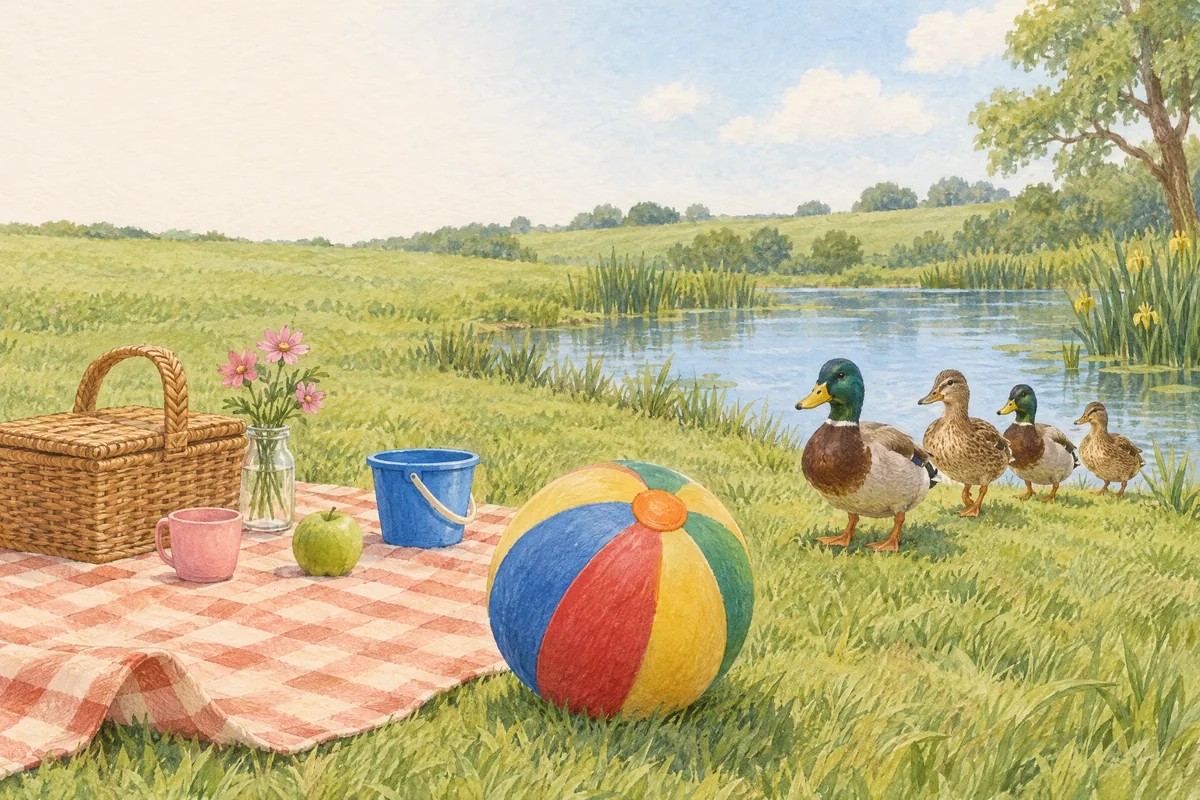
One outing, four small things
A picnic blanket, a ball, some ducks at the pond, a cup that happens to be pink. A toddler does not need a lesson here; they need a parent who names what they are already looking at.1 This page gives you four free cards from the app to say along with the outing — three words and one question — and two tiny games that use what is already on the blanket. Hear each card in a native voice, print all four on one sheet, and leave the rest to the afternoon.
Four cards to hear first
Tap a card to hear the Spanish, then the English. Say it once yourself; your voice is the one your child learns from. Every card is in the permanent free set.
Choose a voice:
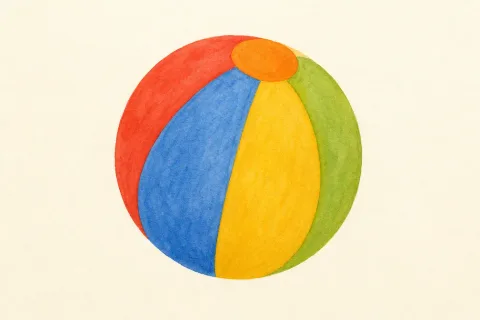
pelota
ball
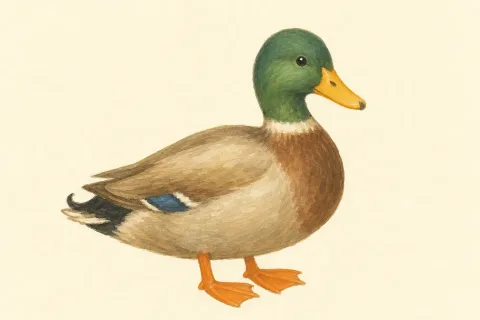
pato
duck

rosa
pink
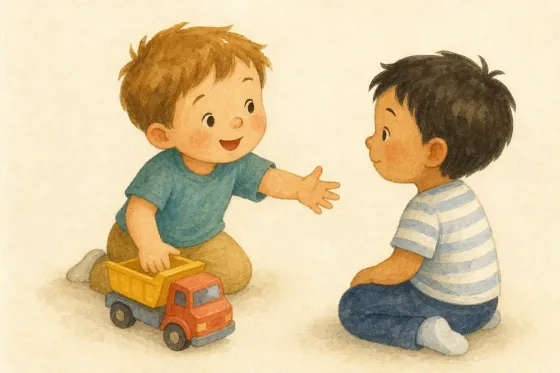
¿Quieres jugar?
Do you want to play?
Print these four cards on one sheet — Spanish on top, English underneath, cut lines included, no account.
Name it: pelota
Wait for the ball to roll past, then say pelota — and ball if your home uses both languages. One word, said while your child is looking at the thing, beats ten words said at a card.1 If they look up at you, that is the moment for the question: ¿Quieres jugar? Answer whatever comes back — a reach, a sound, a word — by rolling the ball.
Count it: four ducks
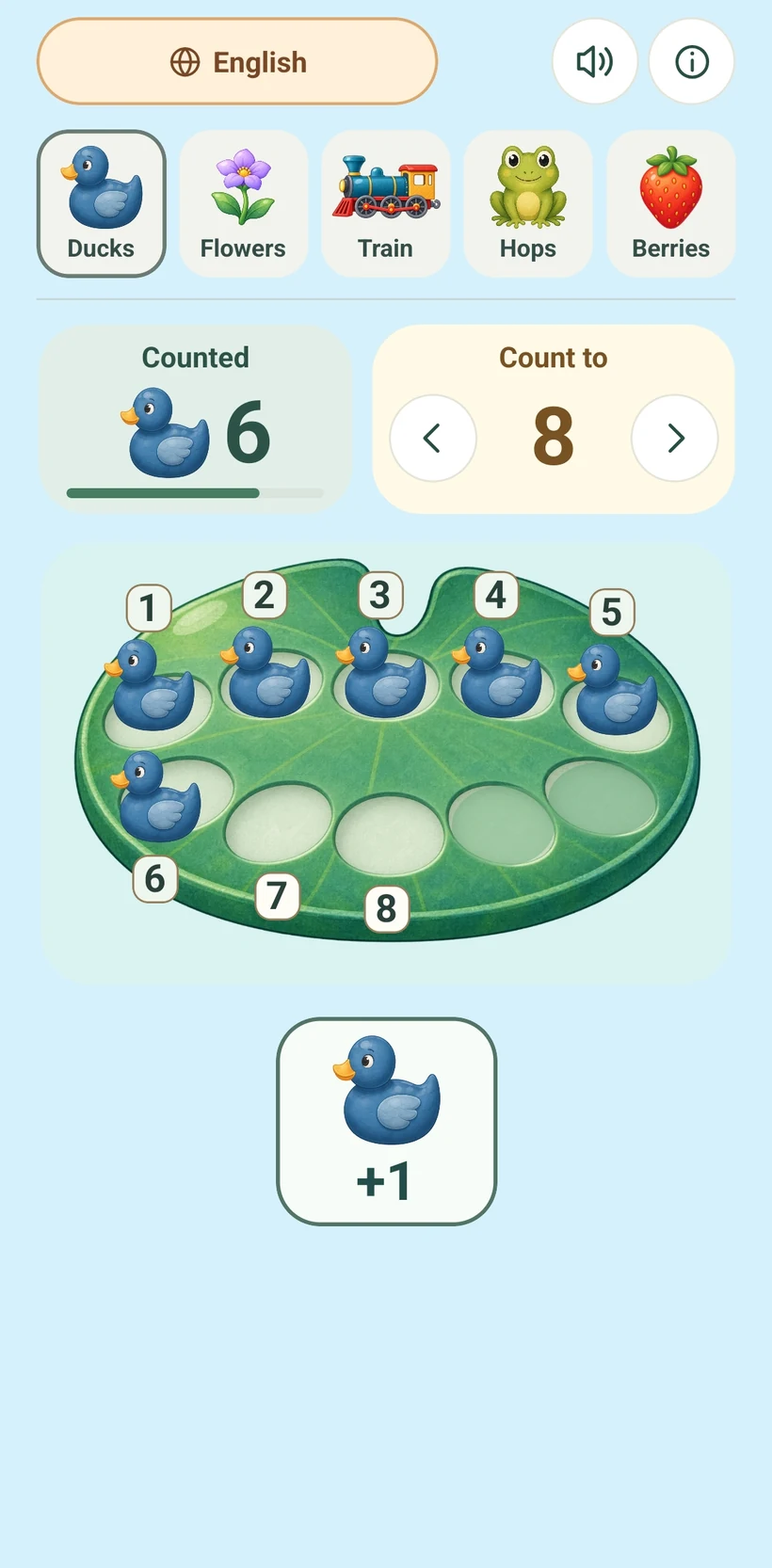
Ducks are the best counting objects in any park: they arrive one at a time and then hold still. Point to each one as you count — one, two, three, four — and say the last number again: four ducks. That last repeat is the part that teaches.2 Then the word: pato.
1234 patos
Want the same game indoors? Open Their First Counting at four ducks in the pond — free in the browser, nothing to install. Counting also has a Picnic for ducks, where each duck gets exactly one berry. (Their First Numbers is the phone-and-tablet cousin for 1 to 10; Counting runs 1 to 100 on the web.)
Sort it: pink, and not pink
Pick one thing your child can see and sort by it. Pink is a good first rule: it is either there or it is not. Put the pink things on one corner of the blanket and everything else on another, naming the color as you go: rosa. Then mix them up and let your child try. Sorting by one visible property is the same move Their First Tidy makes with toys at home.3
At home, the same game continues with real things: a first tidy-up together walks through it with toys, and Their First Tidy turns it into forty gentle tidy-ups on a phone or tablet.
Keep it: one sheet
The picnic sheet prints the four cards above on one page with cut lines: pelota, pato, rosa and “¿Quieres jugar?”, Spanish on top and English underneath. Put them in the picnic bag. A paper card by the real thing does the same job as a screen, with no screen.
In the app
These four cards come from Their First Words, where the 75 free words and 35 free phrases are spoken by a woman and a man in each of eight languages. Spanish families usually go next to the 75 first Spanish words (the whole free set, by age, with every recording) or the full Spanish deck to print. The app adds the other 1,000+ words and 500+ phrases, favorites, and a gentle record of what your child has said.
In short
Questions parents ask.
What Spanish words can I use with a toddler at a picnic or the park?
Start with the things your child looks at: pelota (ball), pato (duck), flor (flower), árbol (tree), parque (park) and comer (eat). All of these are in the free set of Their First Words with a native recording; this page uses pelota, pato and rosa (pink).
How do you say “Do you want to play?” in Spanish?
“¿Quieres jugar?” You can hear it on this page in a woman’s and a man’s native voice. Ask it when your child looks at you, and answer whatever they do with it: a reach, a sound or a word all count as a reply.
How many words should I use at once?
Three or four, said while your child is looking at the real thing. Naming what a child is already attending to is the pattern linked to faster vocabulary growth; a long list said at a card is not.
Does my child have to say the words back?
No. Looking, pointing, reaching and sounds are all responses at this age. Never hold back the ball, a snack or your attention to get a word; keep the exchange pleasant and the words will come in their own time.
What this is based on
Sources
- Tomasello, M. & Farrar, M. J. (1986). Joint attention and early language. Child Development, 57(6), 1454–1463. doi:10.2307/1130423
- Gelman, R. & Gallistel, C. R. (1978). The Child’s Understanding of Number. Harvard University Press. The cardinal principle: the last count word names the set. Harvard University Press
- Their First Tidy, A first tidy-up together: sorting by one visible property with household objects. Parent guide
The card pictures and recordings on this page are from the app’s permanent free set. Illustrations in the app are AI-generated and hand-picked; voices come from a professional, studio-grade speech service and are screened by a person. App screens are real captures.
More guides
Keep reading.
 When do babies say their first words?Around the first birthday, with a wide normal range. What counts, what helps, when to ask.Read the guide · 6 min ›
 Raising a bilingual toddler: what the research says.What the research says about two languages at home, and how to make it work.Read the guide · 7 min ›
 How to use flashcards with a toddler (without turning it into a quiz).Five rules for cards without a quiz — and the research behind each one.Read the guide · 5 min ›
 Is my toddler a late talker? When to worry, and when not to.What the term really means, what to expect at each age, how many children catch up, and the signs worth a call.Read the guide · 9 min ›
 Does a second language delay a child’s speech?No — and here are the studies to hand to whoever asked.Read the guide · 6 min ›
- How many words should an 18-month-old say?The CDC asks for three words. The typical toddler says about fifty. Both are fine.Read the guide · 5 min ›
 Screen time under two: what the research actually says.The AAP and WHO guidance, the studies behind it, and the one screen that teaches.Read the guide · 6 min ›
 A first words list by age.The categories that often come first across languages, and roughly when, from 12 months to 3.Read the guide · 7 min ›
 From a mealtime word to a useful phrase.Use four real cards, playable audio, and one printable sheet during a meal.Read the guide · 4 min ›
- A two-language card routine for an ordinary meal.A small English–Spanish meal routine with actual cards and recordings.Read the guide · 5 min ›
 First Spanish words for toddlers: 75 to start with.Seventy-five words by age and topic, each with a native voice to copy — and which five to start with.Read the guide · 6 min ›
Simple Words, Special Moments
Start with one word.
75 words and 35 phrases are free, forever, with both voices. One $9.99 purchase opens the rest of the 1,000+ words and 500+ phrases, in all eight languages at once. No subscription, nothing renews.